©

Creative activities for children at Chalet des Aiglons

|

Anna Cantu

Educational project - Crèche

This educational project is a support, a contract of trust between the team, the parents, the children and the carers, to give meaning to our practice and seek to harmonise our way of working. Behind our values, here are the essential objectives, for the children we care for, that we seek to put in place with them every day.

How the structure works

The Chalet des Aiglons crèche is designed to cater for young children on holiday in Val d’Isère during the winter and summer seasons.
Our opening hours are from 10am to 6pm, Monday to Friday in summer. We welcome 8 children at a time, but can meet around forty families a week, thanks to a range of options adapted to the pace of the holidays, either full-day or half-day.

Ground floor

  • The reception area
  • Management office
  • The infirmary
  • 1 nap room for the leisure centre
  • 2 storage rooms
  • 1 shared motor room for the crèche and leisure centre

1st floor

  • 2 activity rooms for the leisure centre with 2 toilet blocks
  • 1 catering room
  • 1 ski room for children from the leisure centre
  • 1 technical room
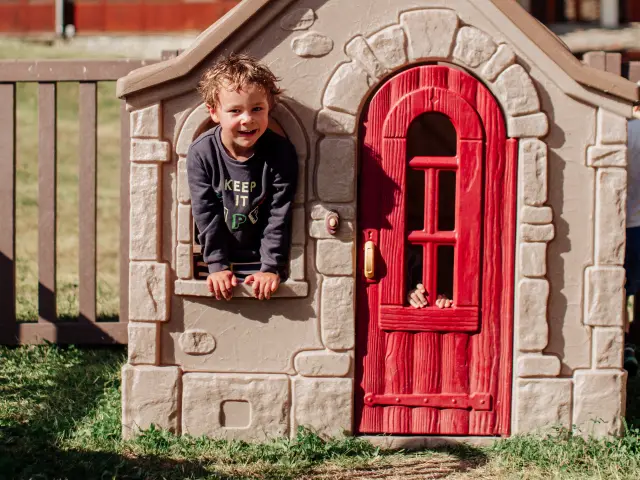
  • 2 fenced gardens with storage shed
  • 1 kitchen

2nd floor

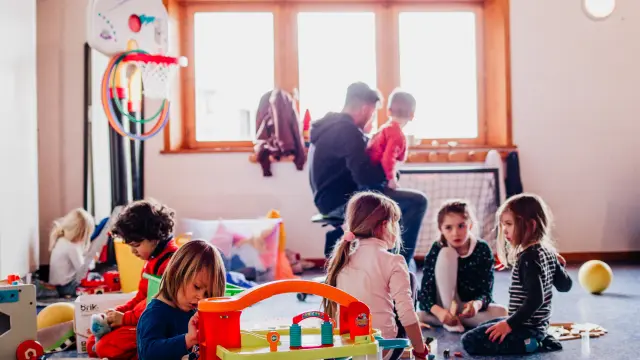
  • The crèche activity room
  • 2 dormitories and a toilet block

The team of professionals

Throughout the summer, a team of 3 professional staff look after your children. They are responsible for ensuring that the educational project runs smoothly. The team is made up of

  • A team leader, in the process of obtaining her VAE in Early Childhood Education, who has an educational role with the children in the nursery, as well as managing and coordinating the team.
    She is responsible for the smooth running of the crèche, recruiting and supporting the team, planning work (schedules, conflict management, etc.), relations with families, managing professional equipment and communicating with management. She is also present with the children to bring the dynamism and perspective specific to her job. She works in collaboration with the Chalet des Aiglons manager, the resort doctor and the PMI doctor. She is responsible for medical monitoring (health records), surveillance and prevention of the children based on existing protocols in collaboration with the referral doctor. She manages the pharmacy (stock and orders).
  • Two professionals trained in early childhood (CAP Early Childhood and Nursery Assistant).
    They promote children’s intellectual, motor and emotional development. They identify the needs of each child and take care of them individually or in groups (meals, hygiene, sleep, activities). They organise and lead activities in the nursery, respecting the psychomotor development and abilities of each child and encouraging them to become independent. They take part in the team’s dynamic by contributing their knowledge, their views and their personalities, creating a real complementarity within the team.

A typical day

10am: Children welcome

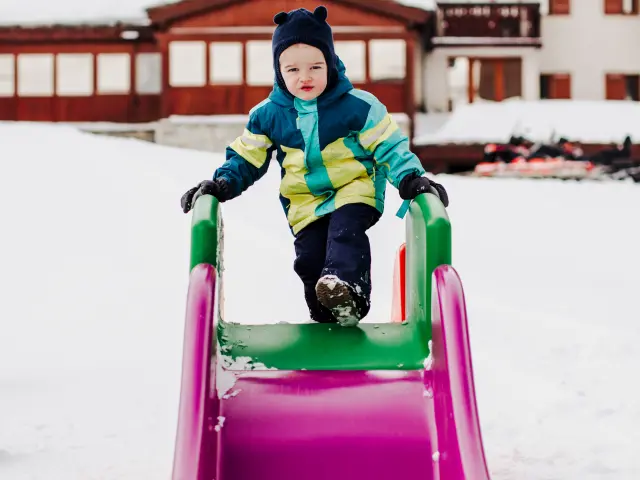
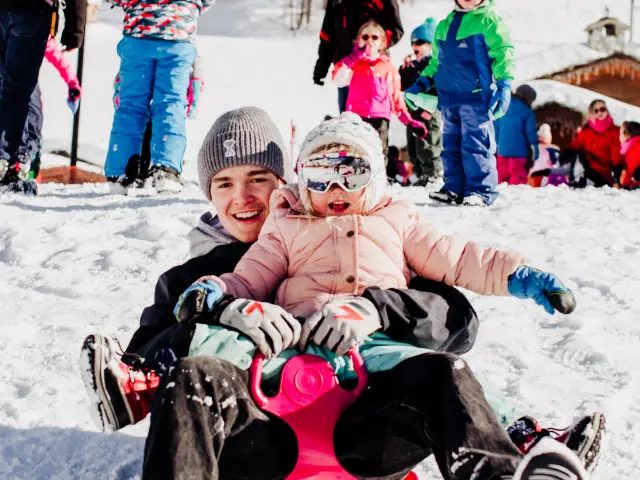
10.15am to 11.30am: Outdoor activities and outings

11.30am to 12.15pm: Go to the toilet, change clothes, wash hands then have lunch

12.15pm to 2pm: Go to the toilet, change clothes, wash hands then undress for nap time. Only children enrolled for a short day are woken up at 2pm.

2pm to 4pm: Waking up in stages, free play.

4pm to 4.30pm: Toilet, diaper change, hand washing and snack.

16:30 to 17:30: Activities and outings outside

5.30pm to 6pm: Staggered departure

The main educational themes the Chalet des Aiglons crèche

Developing children’s independence to help them grow up
On a day-to-day basis, we aim to achieve this objective by putting a number of things in place. First of all, our special inter-age welcome. This intermingling of age groups allows the youngest children to observe the older ones and try to reproduce their gestures. Always curious, they will experiment and try out new skills to help them progress (walking, language, motor skills, etc.). For the older children, this allows us to give them a sense of responsibility by encouraging them to look after the little ones, who interest them so much.
We will also encourage the children to ‘do it themselves’ in a number of areas. When it comes to getting dressed, we’ll let them try out, with some difficulty, the possibility of dressing themselves, learning how to put on their shoes, zip up their jacket, get ready for a nap, etc. We’ll put the older children in low beds so that they can get in and out of bed on their own. At mealtimes, a professional will be available at each table but will let the child put on his bib and eat independently. He will also be able to wash himself with a glove at the end of the meal. During the activities, we allow the child to experiment freely without trying to impose a result that would please us more.

Learning to be independent also means developing free will. We give children the opportunity to choose their activities. We will never force a child who refuses an activity and we will try to adapt to offer them something that corresponds to their needs and expectations. We will speak directly to the child, not over their head, recognising their age and ability to understand us.

Finally, we will follow the steps taken by parents in potty training. We will take the older children to small, adapted toilets, where they will learn to undress themselves, flush the toilet and wash their hands.

Developing physical, sensory and intellectual abilities

Early childhood centres are places of LIFE, places of discovery, learning, experiences and encounters for children and professionals. With this in mind, we will always seek to encourage children to understand their environment through a number of actions.
First and foremost, we are committed to offering a variety of activities, ones that we enjoy and that inspire us to share this convivial moment with the child. We’ll be offering activities that meet each child’s needs, using a variety of educational methods.
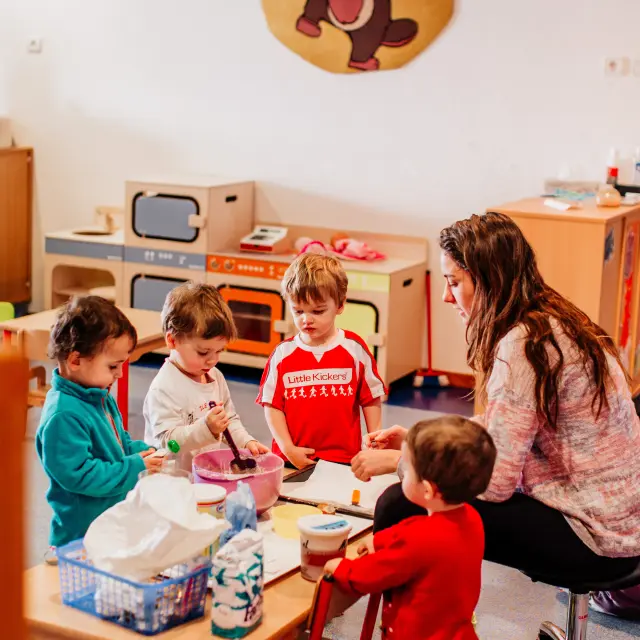
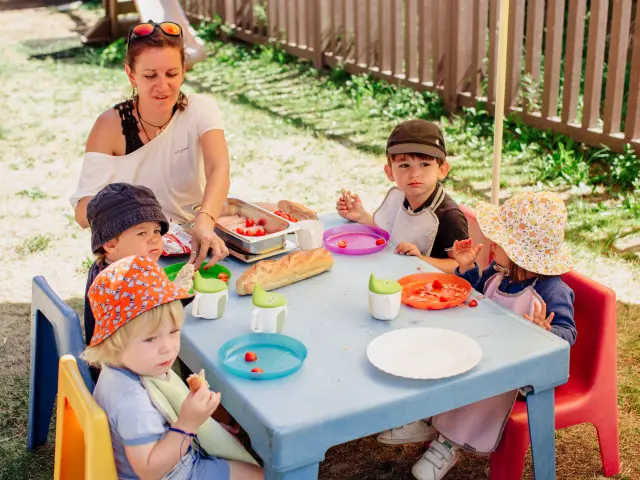
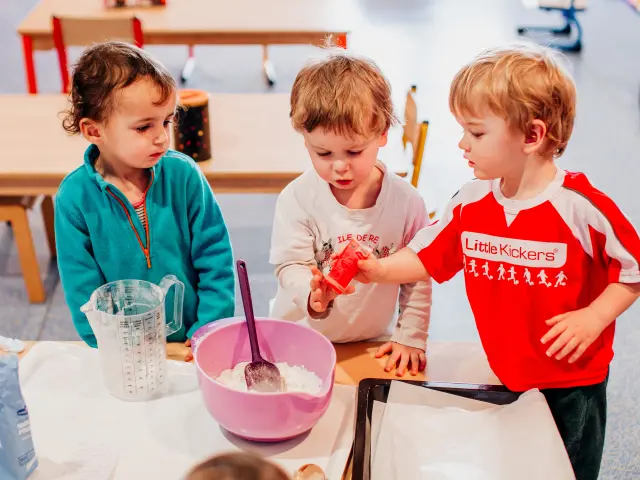
For example, we can offer physical activities such as psychomotor trails, ball pools, dance, outdoor outings, etc. We can also offer intellectual activities such as construction games, puzzles, sound recognition games, bingo, books, etc. We can also organise times for singing and learning nursery rhymes. We will be setting up sensory activities such as baking, modelling dough, handling semolina, mixing cornflour, etc., as well as manual activities such as painting, collage, colouring and drawing.

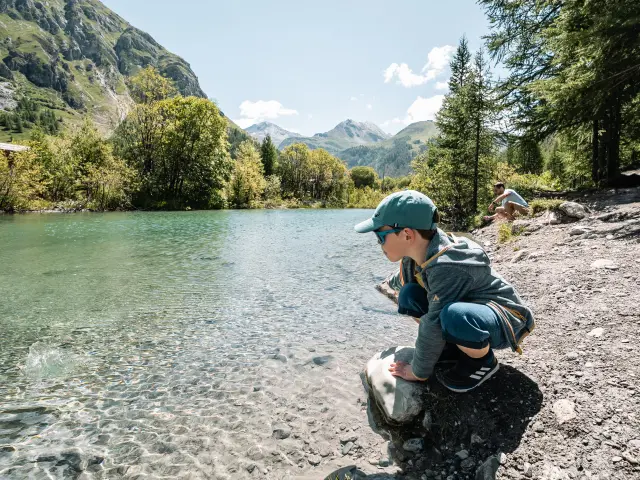
We also offer outings to the village farm, giving children a chance to discover the mountain environment and meet the animals (cows, pigs, hens, geese, horses, rabbits, etc.). We can also take them on a trip up the Solaise cable car to see the mountains and the ski lifts.
Finally, with the youngest children, we use the free-motor method. We want to give children the opportunity to experiment with their bodies so that they can learn on their own. We will never put a child in a situation that they are not familiar with or have not mastered.

Ensuring a sense of emotional and physical security

Our holiday reception is already a special operation to guarantee children their sense of security. They are discovering a new structure with professionals, children and premises that they are unfamiliar with, and unfortunately they will not have much time to adjust. So we have to work even harder than usual to ensure that the children are cared for with complete confidence.
To achieve this, we have to start by providing a high-quality childcare service that listens to and respects families. If children are to feel at ease with us, we must first and foremost reassure parents and develop their confidence in us. We will take the time to listen to the child’s rhythm of life and habits at home, so that we can match them as closely as possible to what they will experience in the crèche, and to the constraints of the community. As far as possible, we will respect parents’ requests. Transmission times will be important and we will take the time to explain to the parents what we have observed in the child during the day (mood, games, learning, etc.). We will also pay close attention to the emotional transitional objects that are so important for children.
Then, throughout the day, we will respect the needs and abilities of each child. We will propose appropriate activities that will never put a child in difficulty. We will use the foreign child’s mother tongue as much as possible to give them a sense of direction. We will let the children go to the adults to whom they refer, and we will try to maintain this privileged link before bringing them to the other professionals. We will take the time to explain our actions and gestures to the children before carrying them out, so as not to surprise or frighten them (holding, dressing, cleaning, etc.).

When changing and going to the toilet, we will be careful to respect the child’s body and privacy. We will be careful with the smallest children: no babies lifted by the feet to clean the nappy, no too quick movements that would be aggressive for the child. We will adapt our actions according to the psychomotor development of each child.
Finally, at bedtime and naptime, an adult will always be with them to reassure those who are having trouble falling asleep, rock those who need the adult’s help and provide a caring presence.

Encouraging imagination and creativity

When we choose to work with children, it’s also to give them the chance to dream, create and imagine every day as they discover their environment. We will be setting up a variety of manual activities based on French culture. At Christmas, for example, we’ll be making Christmas tree decorations, cooking one for the galette des rois, painting flowering trees in the spring, etc. We’ll be looking for new materials and themes on a regular basis (animals, nature, fantasy, etc.).
We have set up a partnership with the village media library, which enables us to have someone come in every week to run a reading and storytelling workshop. This precious time allows the children to project themselves into the stories and develop their imagination.
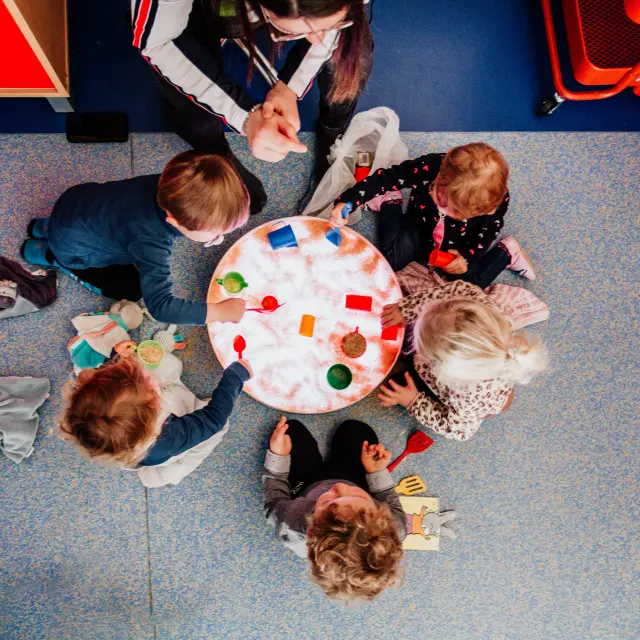
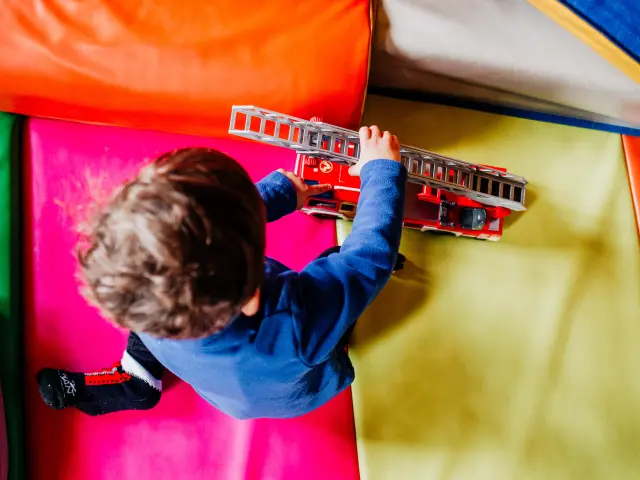
We will be providing access to several types of imitation games. Around the dinette, the children can practise preparing meals and serving at the table. They will develop their imagination by making concrete the scenarios they have observed. With dolls, clothes and pushchairs, children learn to take care of each other and reproduce the actions of their parents. Around the doctor, the fire brigade and the police, children discover the society in which they are growing up.

Learning to refer to shared values

If children are to grow up, they will need a framework and points of reference that they can find in the adults with whom they come into contact. We therefore have a role to play in teaching them about citizenship and living together. Colleagues are therefore committed to having a solid foundation of common rules, a base of operations to which we adhere. When there are differences in the way we handle situations and authority, we will discuss them as a team to understand each other’s limits and readjust our rules with the children. It’s important for us adults to have the same response so that the child can rely on it to grow. We must explain our decisions to the children so as not to create a feeling of injustice. We will seek to maintain an operating framework specific to the centre, which may be very different from what the child knows at home. To achieve this, we will draw on our complementary qualifications and experience to bring each of us a fresh perspective.

Encouraging relationships and exchanges

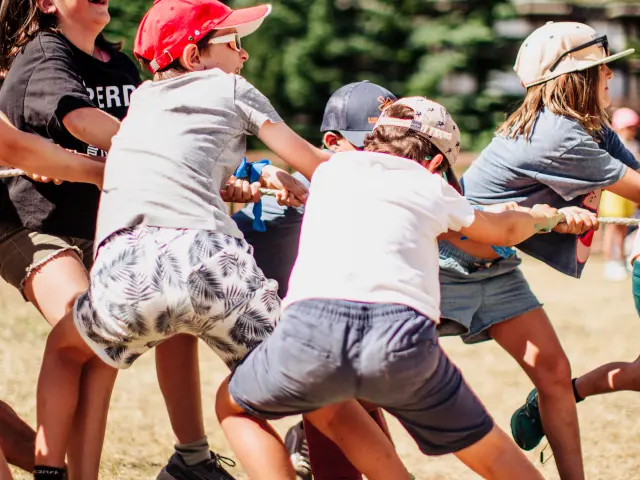
The children will be able to meet new friends and create many exchanges, and it’s up to us to encourage them. To this end, cross-ageing is an advantage: it allows children to turn to their peers or to a different age, depending on what they want to do. They could, for example, share a construction game with an older, more skilful child, or play mum and dad with a younger child. We can also offer cohesion and cooperation activities to encourage the children to interact together. For example, we could organise the painting of a collective fresco, the sharing of a snow bin brought up to the nursery, the joint construction of a brick hut, etc. We will encourage the older children to help the younger ones (at mealtimes, during games, etc.). Finally, we are also committed to promoting the inclusion and reception of children with disabilities, to give them the opportunity to share with their peers. We have previously welcomed children who are deaf or hard of hearing, children with developmental delays or disabilities, but these have never been a hindrance to the children’s interactions.

Introducing children to ecology

In early childhood, the introduction to ecology is still a little difficult to make children aware of their planet. We prefer to talk about raising awareness of their environment. We show them the richness of the place they are discovering by observing the mountain and its animals through the outings and activities on offer. We will make them aware of their responsibilities in terms of everyday actions that should become reflexes by explaining to them to turn off the light after using the toilet, not to waste water when cleaning their hands, to dispose of rubbish in the bin, etc. We will also serve small quantities of food at mealtimes to avoid food waste and encourage children to finish their plates.

Creating the right environment

When children come on holiday to our centre, they come for a time of pleasure, relaxation and sharing. To make this possible, we need to create the right environment for them. We’ll start by creating a warm, playful space in the morning reception area that children will want to enter. We can set up the dinette with plates and kitchen accessories on the table, we can start a jigsaw puzzle that the child will come and continue, build a brick tower that the child will want to destroy…
For the environment to be conducive to fun, we also need to be able to readjust our activities, to change what we had planned depending on what the group of children sends us. For example, if we had planned a manual activity and the children weren’t interested because they were so excited, we could suggest a psychomotor activity in the ball pool or outside instead. We need to be able to analyse our work and our proposals in order to readjust the objectives.

In conclusion
We have drawn up a list of objectives that we want to work towards, we have measured the practices that we have and identified those that make sense and that we want to maintain and develop! We will need to review this educational project on a regular basis, to take stock of our actions and determine together what improvements need to be made. This work is a draft which should lead to further reflection by the team on a daily basis…

Discover Other themes